
How Venture Capital Rounds Close.
Capital Execution. Capital. Deployed.
Capital execution is the stage where venture capital rounds are structured, negotiated, documented and closed. This page sits within the Venture Capital Stack and focuses on how venture capital deals close, following the earlier stages of capital preparation and investor evaluation.
Capital execution is the final stage of the funding system, following how capital is structured through the capital stack, how companies prepare for funding, how venture capital operates, and how platforms structure investment.Capital execution is the process through which a company moves from investor discovery through diligence, structuring, and final capital deployment. It connects strategy, readiness, and investor engagement into a structured funding outcome.

Venture capital deals close through a structured execution process that defines how startup funding rounds are negotiated, documented, and completed. This stage of the funding process determines how ownership is allocated, how risk is managed, and how capital is deployed. Understanding how venture capital deals close is essential for founders navigating fundraising and investors committing capital.
The final stage of startup fundraising is execution. To understand how venture capital works before execution, see the Venture Capital Stack guide, start with the How to Raise Venture Capital guide. Understanding how venture capital deals close requires understanding the venture capital term sheet process and the startup funding closing process.
How Venture Capital Deals Close
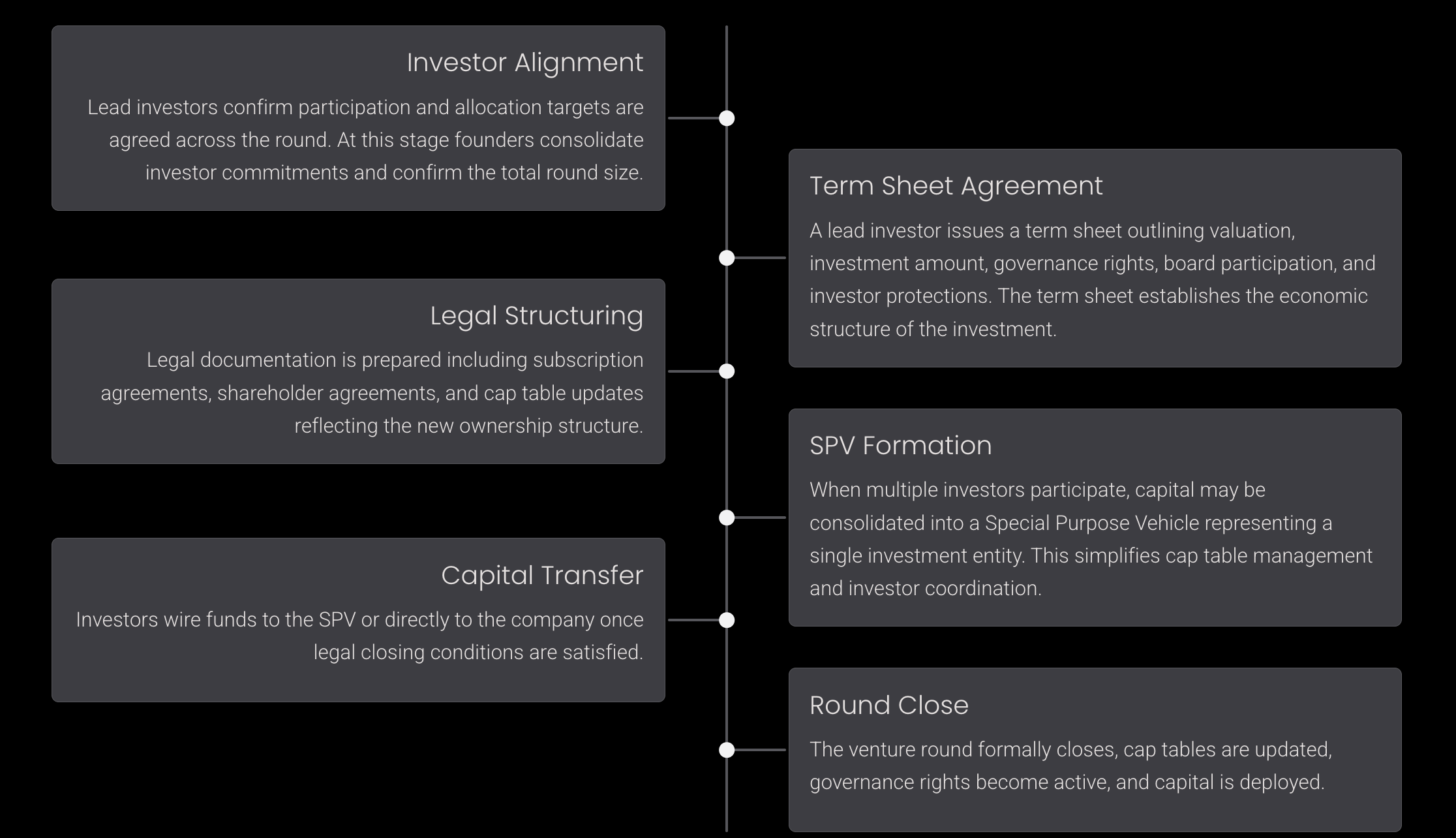
Venture capital deals close through a structured execution process that includes investor alignment, term sheet agreement, legal documentation, governance finalisation, and capital transfer.
Once a lead investor sets the terms, the round moves through documentation, ownership structuring, and closing conditions before capital is deployed. This process defines how ownership is allocated, how risk is managed, and how investors formally enter the company. Execution is the final stage of the process; see Startup Fundraising Explained for the full system.
Venture Capital Term Sheet Process
The venture capital term sheet process is the stage where investors define the economic and governance terms of the investment.
A lead investor typically sets the term sheet, outlining valuation, ownership allocation, investor rights, board structure, and key protections. Once agreed, the term sheet becomes the foundation for all legal documentation and final deal execution.
The term sheet process determines how control, risk, and return are structured within the funding round, making it one of the most critical stages in venture capital deal closing. For how venture capital works before deal execution, see the Venture Capital Stack guide.
Startup Funding Closing Process Explained
The startup funding closing process is the final stage of venture capital execution. It converts investor interest into legally binding capital through structured agreements, governance alignment, and capital deployment.
This stage determines how ownership is finalised, how investor rights are defined, and how capital enters the business.
What is capital execution?
Capital execution is the structured process through which a venture capital round is negotiated, documented, and closed.
What instruments are used in venture capital rounds?
Common venture capital instruments include SAFEs, convertible notes, priced equity rounds, and SPVs.
Closing the Deal.
After investor diligence and negotiation, venture capital rounds move through a structured closing process. Lead investors align the round, legal documentation is prepared, and capital is deployed once governance and ownership structures are finalised.
This stage follows capital preparation and investor evaluation. See the Knowledge Base Hub guides for how companies reach this stage.
Venture Deal Structures.
Venture capital deals are structured through specific financial instruments that define ownership, governance, and investor rights at the point of closing.
Understanding Venture Capital Funding Structures
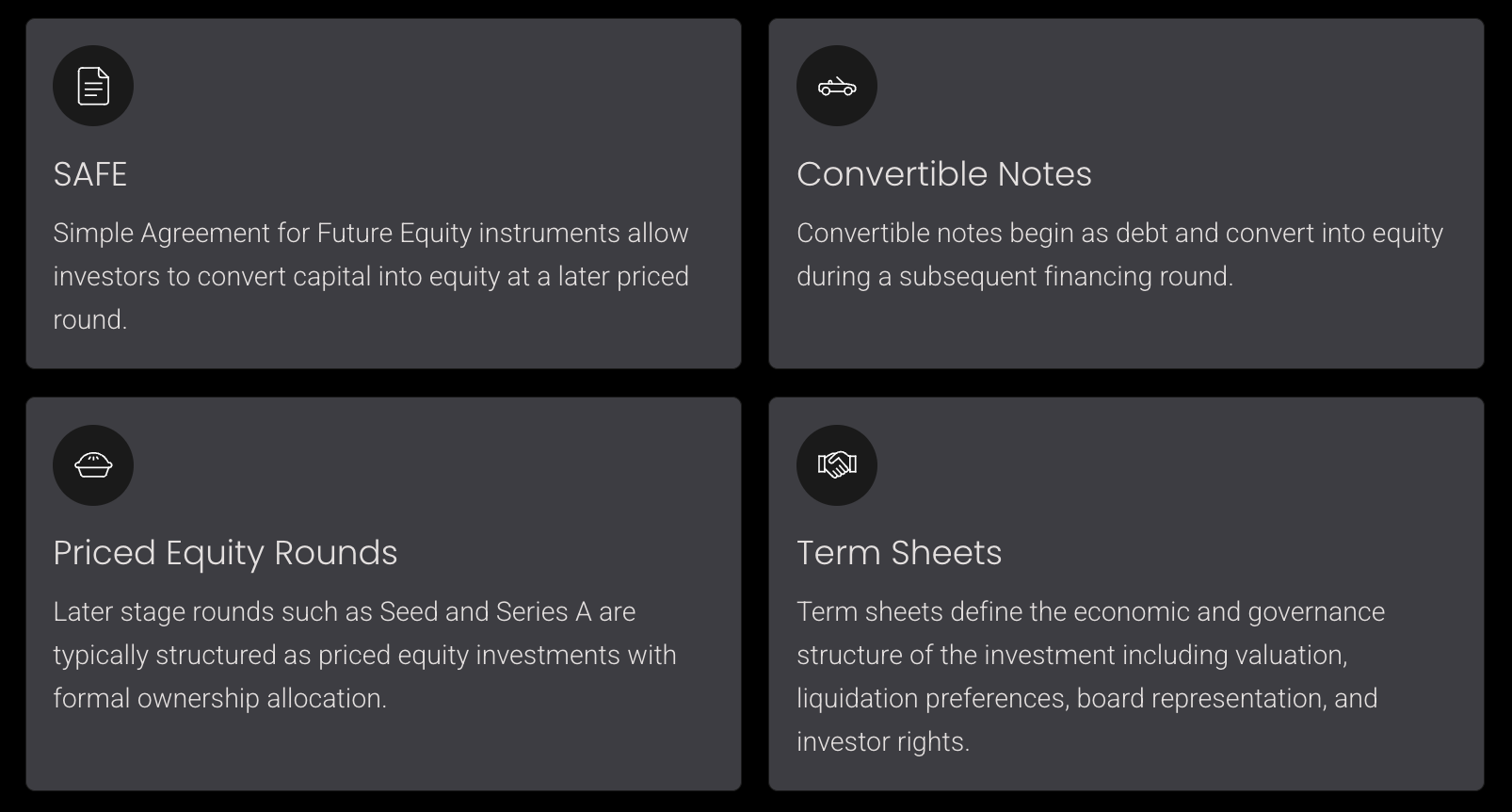
Venture capital investment rounds are structured using several financial instruments depending on the stage of the company and the preferences of investors. Early-stage startups often raise capital using SAFE agreements or convertible notes, which convert into equity at a later priced round. As companies mature into Seed or Series A stages, funding rounds are typically structured as priced equity investments governed by a formal venture capital term sheet. These investment structures define valuation, ownership allocation, governance rights, and investor protections within the startup capital stack.
Investor Participation.
Ways Investors Participate in Startup Funding
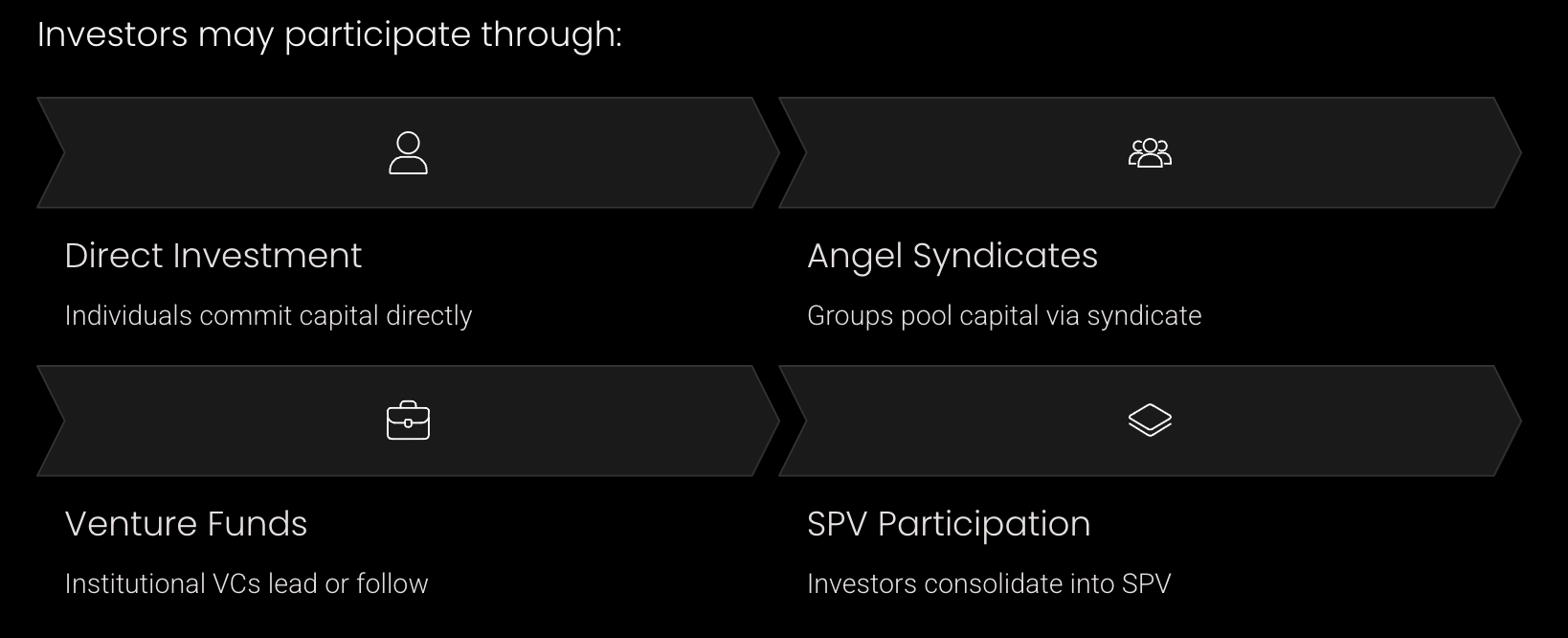
Startup funding rounds often include multiple types of investors participating through different capital structures. These may include direct angel investment, angel syndicates, venture capital funds, or participation through special purpose vehicles (SPVs).
Investor Participation in Venture Capital Rounds
Startup funding rounds typically involve a combination of investor types participating through different capital structures. Individual angel investors may invest directly, while groups of angels often participate through organised syndicates. Institutional venture capital funds frequently lead or follow investment rounds, bringing larger capital allocations and governance oversight. In some cases, investors participate through Special Purpose Vehicles (SPVs), which consolidate multiple investors into a single investment entity and simplify cap table management during venture capital fundraising.
Institutional Execution Infrastructure.
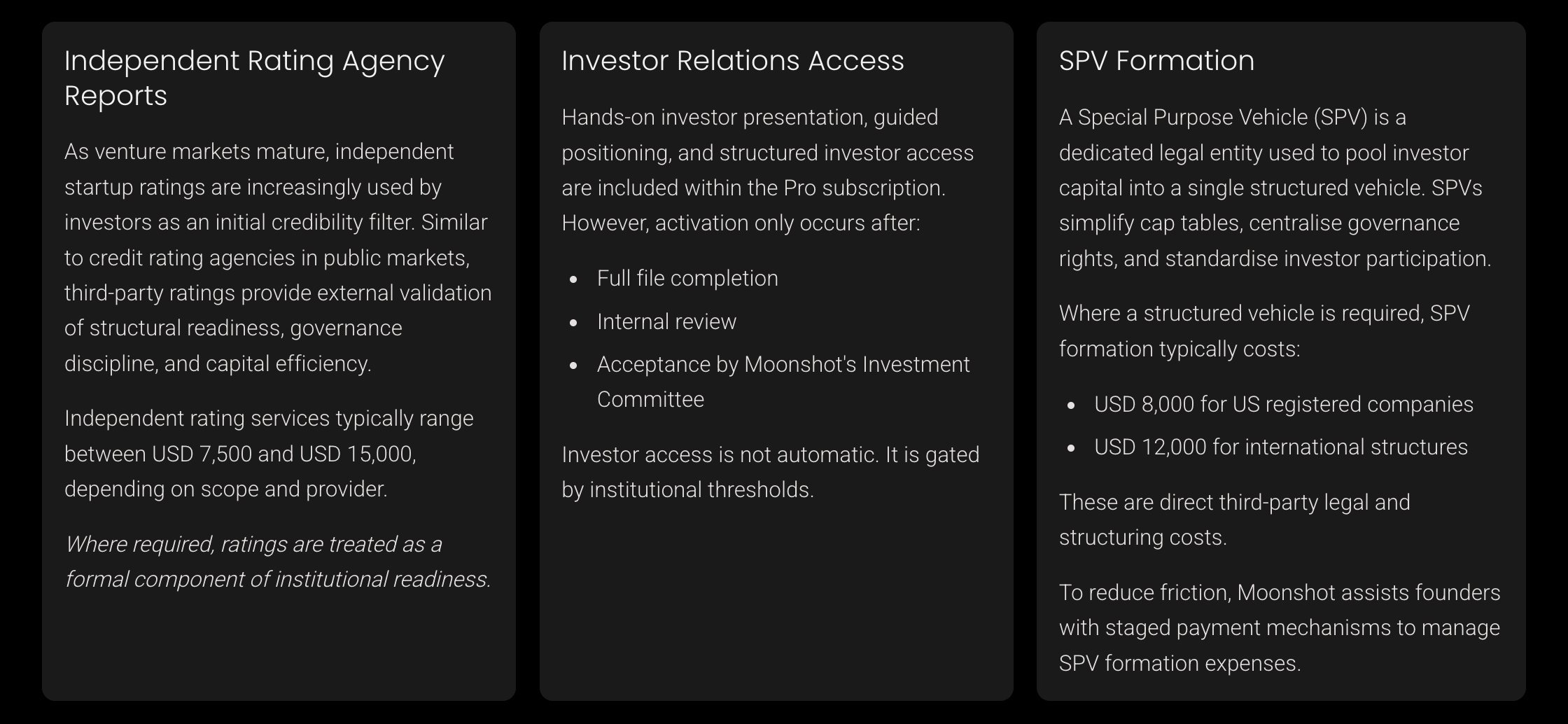
Ratings, investor activation and SPV formation
Institutional venture capital funding requires structured preparation, disciplined investor engagement, and legally robust capital structures. Independent startup ratings, structured investor relations processes, and Special Purpose Vehicle (SPV) formation are increasingly common components of institutional startup financing environments.
This execution layer is part of a broader venture capital platform that structures readiness, evaluation, and capital deployment.
Institutional Capital Requires Institutional Structure
As venture capital markets mature, investors increasingly rely on structured infrastructure before deploying capital. Independent startup ratings can provide external validation of governance discipline and structural readiness, while investor relations processes ensure founders meet institutional engagement standards before accessing capital networks. Special Purpose Vehicles (SPVs) are commonly used to consolidate investor participation and simplify cap table management during funding rounds. Institutional capital requires institutional structure. Ratings, disciplined investor activation, and proper SPV formation are core components of professional venture capital infrastructure.
Cost in Context.
Alignment is structural, not transactional.
Raising venture capital involves more than preparing a pitch deck. Founders must organise their company, structure their capital strategy, and execute the fundraising process correctly.
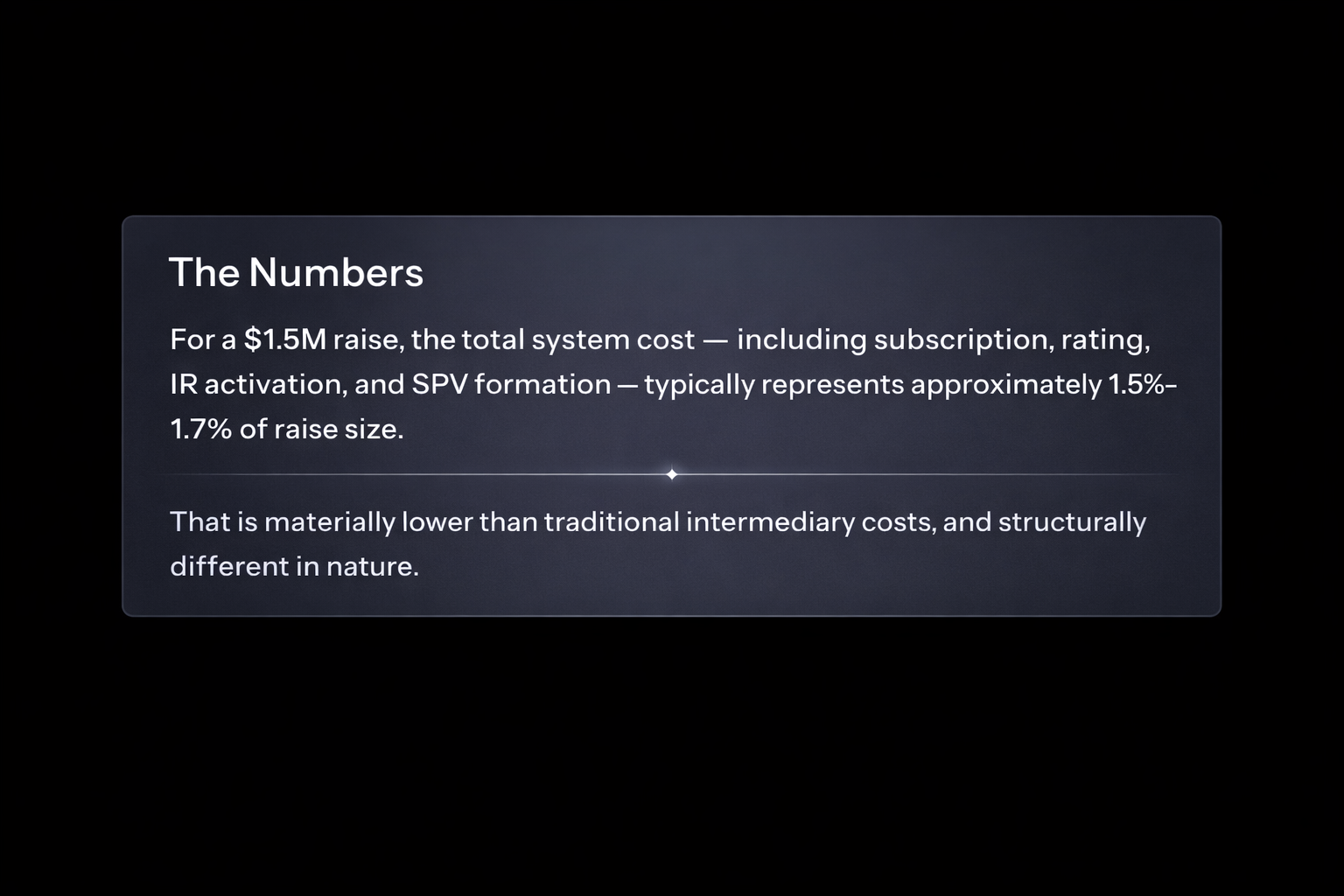
MoonshotNX provides the infrastructure required to prepare companies for institutional capital. When subscription, investor readiness preparation, investor room activation, and SPV formation are combined, the total system cost remains a small fraction of the capital raised.
Economic Alignment — Infrastructure, Not Intermediation.
MoonshotNX is venture capital infrastructure, not a brokerage. Founders pay a platform subscription to access the Capital Stack system. This provides entry to the framework, progression tracking, and structured capital preparation pathways.
Institutional readiness itself is a separate layer. Preparing a company for venture capital typically requires financial validation, governance review, valuation defensibility, and data room correction. In the open market these services often cost USD 30,000 to USD 200,000.
Moonshot integrates that structural preparation layer directly into its underwriting model. Companies progress through readiness validation before investor access is activated. Moonshot does not charge placement or success fees. Investor introductions are not transactional.
Capital moves only when institutional readiness thresholds are met. Alignment is structural, not transactional.
Built for founders who are already building.
MoonshotNX is structured to support founders through the full venture capital fundraising journey. Companies begin by learning how venture capital works, then prepare their company for investors, work with advisors to structure a funding round, and finally enter the Investor Room once they are ready to raise capital.
Each tier provides the tools, guidance, and infrastructure founders need as they move from preparation to institutional fundraising.
Startup Funding Closing Process.
The startup funding closing process is the final stage of venture capital execution. It converts investor interest into legally binding capital through structured agreements, governance alignment, and capital deployment.
This stage determines how ownership is finalised, how investor rights are defined, and how capital enters the business.
Also in this hub:
Strong financial planning helps founders understand capital requirements, runway management and fundraising strategy.
Related Resources:
HUB 1: Startup Fundraising Explained – How Capital Actually Works
HUB 2: Investor Readiness – What It Means And How Founders Get There
HUB 3: Startup Valuation, Equity And Dilution Explained
HUB 4: Cap Tables, Ownership And Exit Outcomes
HUB 6: Startup Financing Instruments And Capital Structures Explained
These resources are designed to be read together and provide a structured understanding of startup fundraising, investor readiness, capital formation, valuation, ownership and financing decisions.
Frequently Asked Questions About Capital Execution
What is capital execution in venture capital?
Capital execution is the process through which a startup funding round is formally structured and closed. It includes investor alignment, term sheet negotiation, legal documentation, governance finalisation, and capital transfer.
How do venture capital rounds actually close?
Venture capital rounds close through a structured execution process. This usually includes investor alignment, term sheet agreement, legal documentation, cap table and governance updates, SPV formation when required, and final capital transfer.
What is a SAFE in venture capital?
A SAFE, or Simple Agreement for Future Equity, is an investment instrument that gives investors the right to receive equity in a future priced round. SAFEs are commonly used in early-stage financing because they defer valuation negotiations until a later institutional round.
What is a convertible note?
A convertible note is a form of debt that converts into equity during a future financing round. Investors lend capital to the company initially, and the note converts into shares once a priced round occurs, typically with a valuation cap or discount.
Why are SPVs used in venture capital rounds?
SPVs are used to pool capital from multiple investors into a single structured investment vehicle. They simplify cap tables, centralise governance rights, and make it easier for multiple investors to participate in one round.
What is an independent startup rating?
An independent startup rating is a third-party assessment of a company’s structural readiness for venture capital investment. These evaluations typically review governance discipline, financial structure, capital efficiency, and execution risk.
How do investors participate in venture capital rounds?
Investors participate in venture capital rounds through direct angel investment, angel syndicates, venture capital funds, and SPVs. Each structure gives investors a different way to allocate capital while maintaining formal ownership and governance arrangements.
Does MoonshotNX act as a broker or placement agent?
No. MoonshotNX operates as venture capital infrastructure, not a brokerage or placement agent. Founders access the platform through subscription, and investor access is gated by institutional readiness rather than transactional introductions.
Is MoonshotNX a startup accelerator?
No. MoonshotNX is not an accelerator or launchpad. It is venture capital infrastructure for companies that are already building and preparing to raise institutional capital through structured readiness and execution.